
UGC NET Paper1 Previous Year Solved Papers - 24th June 2019 Morning Shift


- Option : A
- Explanation : The proposition 'No historian are non- mathematician' is equivalent to 'All historian are mathematicians'. And its negative proposition is 'No historians are mathematicians'
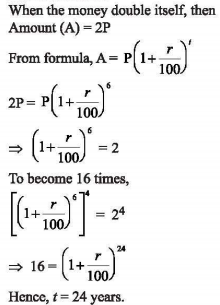
- Option : B
- Explanation : Analogical reasoning relies upon an analogy,
citing accepted similarities between two
systems to support the conclusion that some
further similarity exists.
Deductive reasoning starts with a general statement, premise or hypothesis, and examines the possibilities to reach a specific, logical conclusion.
Inductive inference goes from the specific to the general. We make many specific observations, discern a pattern from them, make a generalization, and infer an explanation or a theory.
Hypothetical reasoning explores several different alternative solutions in parallel to determine which approach or series of steps best solves a particular problem.
- Option : A
- Explanation : The transaction model of communication
describes communication as a process in
which communicators consiously generate
social realities within social, relational,
and cultural contexts. They don't just
communicate to exchange messages; but
to create relationships, form intercultural
alliances, shape their self-concepts, and
solve problems.
The interactive model is less message- focused and more interaction-focused. Each participant alterates rates as sender and receiver very quickly and often without conscious thought in order to keep communication going.
30. Today’s media – society equation is large:
- Option : C
- Explanation : The role of media is to reach new information from the source to the target audience in a one way communication. In the process, it spreads thought and philosophy; informs on union and division of peoples and boundaries; popularises or demonises individuals; builds prejudices; and markets products. Though traditionally, the media prided itself on morality and equality, which lent a mystical character to it; with the rise of a global commercial world; it has steadily moulded a consumerist society. Trade and commerce govern individual as well as national interests. So, the media-society equation today is largely consumer-conscious.
