
UGC NET Management Previous Year Solved Papers - December 2019
86. In Queuing Theory, statistical pattern by which customers arrive over a period of time, follows:
- Option : C
- Explanation : The basic process assumed by most queuing models is that “customers” requiring service are generated over a period of time by an “input source”.
These customers enter the queuing system and join a queue. At certain times, a member of the queue is selected for service by some rule known as “service discipline”. The required service is then performed for the customer by the “service mechanism”, after which the customer leaves the system. This process is shown in Fig.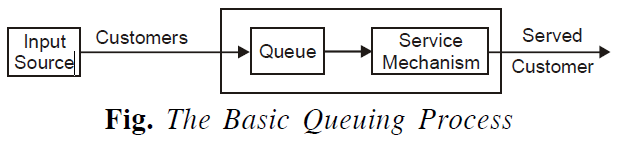
One characteristic of the input source or calling population is its “size”. The size is the total number of customers that might require service from time to time. It may be assumed to be either finite or infinite. Since the calculations are far easier for the infinite case, this assumption is always made while developing a queuing model. However, the finite assumption must be made if the rate at which the input source generates new customers is significantly affected by the number of customers in the system.
- Option : A
- Explanation : Common Errors in Network: There are three types of errors which are common in Network Diagramming:
> Looping
> Dangling
> Redundancy
Looping (Cycling): In a network diagram looping error is also known as cycling error. Drawing an endless loop in a network is known as error of looping. A loop can be formed if an activity is represented as going back in time.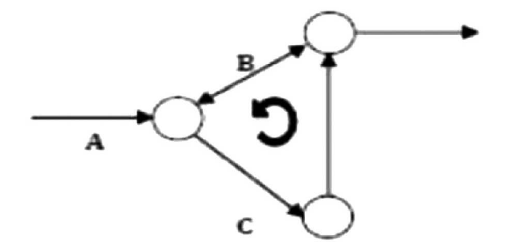
Figure: Looping Error
Dangling: In order to disconnect an activity before tbe completion of all the activities in a network diagram is called as Dangling.
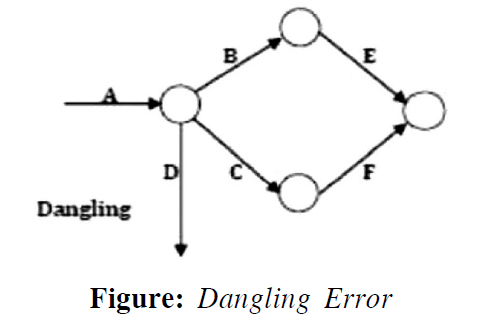
Redundancy: If a dummy activity is the only activity emanating from an event and which can be eliminated is called as Redundancy.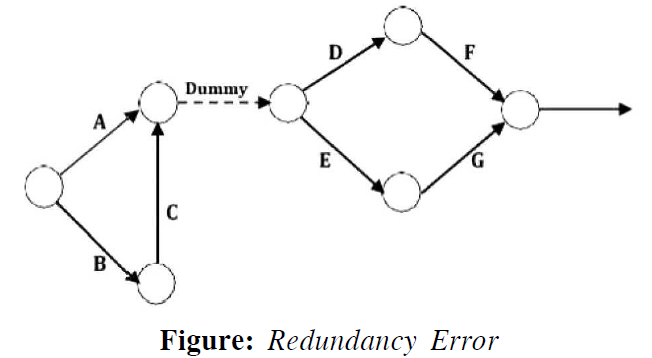
88. The steps followed in developing a global pay system in right sequence are:
- A
Set strategy, identify crucial executive behaviour, global philosophy framework, identify gaps, systematize pay system, adopt pay policies


- B
Set strategy, global philosophy framework, identify gaps, identify crucial executive behaviour, adopt pay policies, systematize pay system
- C
Identify crucial executive behaviour, set strategy, global philosophy framework, identify gaps, systematize pay system, adopt pay policies
- D
Adopt pay policies, identify crucial executive behaviour, set strategy, global philosophy framework, identify gaps, systematize pay system.
- Option : A
- Explanation : Balancing global consistency in compensation with local considerations starts with establishing a rewards program that makes sense in terms of the employer’s strategic aims. Then the employer turns to more micro issues, such as, is how we’re paying our employees abroad competitive? Steps to follow in creating a global pay system include these:
Step I. Set strategy: First, formulate longerterm strategic goals, for instance, in terms of improving productivity or boosting market share.
Step 2. Identify crucial executive behaviours. Next, list the actions you expect your executives to exhibit in order to achieve these strategic goals.
Step 3. Global philosophy framework. Next, step back and ask how you want each pay component (salary, bonus, incentives, and so forth) to contribute to prompting those executive actions.
Step 4. Identify gaps. Next, ask, “To what extent do our pay plans around the world now support these actions, and what changes if any are required?”
Step 5. Systematize pay systems. Next, create more consistent performance assessment practices, and establish consistent job requirements and performance expectations for similar jobs worldwide.
Step 6. Adapt pay policies. Finally, review your global pay policies (for setting salary levels, incentives, and so forth). Conduct surveys and analyses to assess local pay practices. Then fine-tune the firm’s global pay policies so they make sense for each location.
- Option : D
- Explanation : R.A. Sharma in his studies classified all the factors motivating the entrepreneurs into two types:
1. Internal Factors: The internal factors are:
(a) Desire to do something new
(b) Education background
(c) Experience
2. External factors: The external factors are:
(a) Government assistance and support
(b) Availability of raw material and labour
(c) Encouragement from big business houses
(d) Promising demand for the product
B. Murthy et al. studied and classified the motivating factors for entrepreneurs and classified them into three types:
1. Ambitious factors
2. Compelling factors
3. Facilitating factors
