
PREVIOUS YEAR SOLVED PAPERS MCQ - June 2019


Consumer behaviour consists of all the activities people undertake when obtaining, consuming and disposing of products and services. Studying consumer behaviour involves looking at what influences people to behave in particular ways when obtaining products, using them and disposing of them.
Understanding the way people think when they go about their purchasing behaviour is a key factor in successful marketing. The motivations, decision-making processes and post-purchase behaviour of consumers are useful when seeking to persuade people to choose one product rather than another, and to encourage people to recommend products to their friends.
Understanding the way people think when they go about their purchasing behaviour is a key factor in successful marketing. The motivations, decision-making processes and post-purchase behaviour of consumers are useful when seeking to persuade people to choose one product rather than another, and to encourage people to recommend products to their friends.
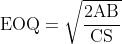
Where, A = annual consumption
B = ordinary cost per order
CS = carrying cost per unit per annum

According to Wilson, “Goodwill has been
very ably divided into three types—cat, dog
and rat—in view of the peculiar habits of
these three animals. The cat tends to stick to
the abode, cat goodwill is therefore that
which will adhere to the business which is
being transferred and is the most valuable.
The dog follows his master, dog goodwill is
difficult to transfer and is correspondingly
less valuable. The rat is a migrant, rat
goodwill is practically valueless, as it
represents those customers who have no
specialities either to the business or its
properties and who may be here today and
gone tomorrow. Summed up, cat goodwill is
adherent; dog personal and rat fugitive.
Adherent goodwill is only valuable as
attaching to the business; personal goodwill
is unsaleable, fugitive goodwill is only
valuable in that as one fugitive goes another
may arrive.”
55
Match List-I with List-II:
Choose the correct code from those given below:
| List-I | List-II |
| (a) Net income approach | (i) Inventory management |
| (b) Gordan model | (ii) Capital budgeting |
| (c) Internal rate of return | (iii) Capital structure theory |
| (d) Reorder level | (iv) Dividend theory |
Codes
| (a) | (b) | (c) | (d) | |
| 1 | (ii) | (iii) | (iv) | (i) |
| 2 | (iii) | (iv) | (ii) | (i) |
| 3 | (iii) | (iv) | (i) | (ii) |
| 4 | (ii) | (i) | (iv) | (iii) |
