


The best algorithm is we can solve in linear time
using right to left pass.
Data Structures and Algorithms MCQ - Performance Analysis of Algorithms and Recurrences
a1, a2 .....................an
b1, b2 .....................bn
In order to find out the largest span, check the
sums of
ai +............aj and bi +..............bj
at each step.
If a1 + a2 = b1 + b2 go on, check a1 + a2 + a3 and b1 + b2 + b3.
If not, then check a2 + a3 and b2 + b3
Similarly a check is done at each of the n places
during traversal. A separate variable has to be
kept that contains the maximum span observed
hitherto
Hence fastest algorithm computes with (~) (n)
time and space.
Radix sort is counting based sorting technical the
time complexity is Q(n).
From the list of given n numbers [say n is even], Pick up first two elements, compare them
assign Current – min = min of two numbers
Current – max = max of two numbers
From the remaining n – 2 numbers, take pairs wise and follow this process given below.
1. Compare two elements
Assign min = min of two numbers
max = max of two numbers
2. Compare min and current – min
Assign current – min
= min{current– min,min}
3. Compare max and current – max
Assign current – max
= max{current – max, max}
Repeat above procedure for all the remaining
pairs of numbers. We can observe that each of
pair requires 3 comparisons
1. for finding min and max
2. For updating current – min
3. for updating current – max
But for initial pair we need only one comparison
not 3.
∴ Total number of comparisons
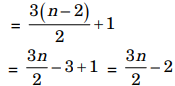 Here n =100, so number of comparisons = 148.
Here n =100, so number of comparisons = 148.Given: n numbers
To find: Tightest upper bound on number of swaps
required to sort n numbers using selection sort.
Analysis: In selection sort, in the unsorted part
of the array, we find the minimum element and
swap it with the value placed at the index where
the unsorted array starts.
Hence, for each element to put it in its sorted
position, we will do some swaps. In each
itenation, when we find the minimum and place
it in its sorted position, we do only one swap.
There are n such iterations, since maximum
number of positions to sort is n.
Hence, there are n.O(1) swaps
⇒ O(n) swaps.
∴ The solution is (B)
