PREVIOUS YEAR SOLVED PAPERS MCQ - August 2016 Paper 3
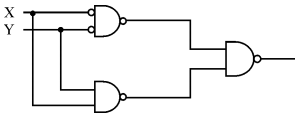
Correct AnswerOption D
Rate difficulty Rate difficulty:
Choose a difficulty.


So, option (D) is correct.
Cancel reply

Your email address will not be published. Required fields are marked *


Cancel reply

Your email address will not be published. Required fields are marked *

Correct AnswerOption B
Rate difficulty Rate difficulty:
Choose a difficulty.
  • An OODBMS avoids the “impedance mismatch” problem.Correct.
  • An OODBMS doesn't avoids the “phantom” problem.
  • An OODBMS doesn't provides higher performance concurrency control than most relational databases. Since it is distributed.
  • An OODBMS provides faster access to individual data objects once they have been read from disk.Correct
  • SO, option (B) is correct.
    Cancel reply

    Your email address will not be published. Required fields are marked *


    Cancel reply

    Your email address will not be published. Required fields are marked *

    Correct AnswerOption B
    Rate difficulty Rate difficulty:
    Choose a difficulty.
    Share this question
    Share:

    The condition that all the data of the global relation must be mapped into the fragments, that is, it must not happen that a data item which belongs to a global relation does not belong to any fragment, is called Completeness condition. In distributed system it is convenient that fragment to be disjoint, so that the replication of data can be controlled explicitly at the allocation level.this is called Disjointness condition To reconstruct any global relation from its fragment is called Reconstruction condition. The formation of no. of fragments into a cluster is called Aggregation condition. So, option (B) is correct.
    Cancel reply

    Your email address will not be published. Required fields are marked *


    Cancel reply

    Your email address will not be published. Required fields are marked *

    Correct AnswerOption D
    Rate difficulty Rate difficulty:
    Choose a difficulty.
    RA1 : T1 ⨝ T1.P = T2.A T2 where ⨝is natural join symbol. It will result 3 tuples:
    P = ARC
    1056
    1055
    2563
    RA2 : T1 ⟕ T1.P = T2.A T2 where ⟕ is left outer join symbol. It will result in 4 tuples.
    P = ARC
    1056
    1055
    158Null
    2563
    RA3 : T1 ⨝ T1.P = T2.A and T1.R = T2.CT2. It will result in 1 tuple.
    P = AR = C
    105
    So, option (D) is correct.
    Cancel reply

    Your email address will not be published. Required fields are marked *


    Cancel reply

    Your email address will not be published. Required fields are marked *

    Correct AnswerOption
    Rate difficulty Rate difficulty:
    Choose a difficulty.

    Decomposition of R into R1(C, A) and R2(A, B) is lossless. Because C → A, A → B. So, C → AB can be derived and there is no loss. Decomposition of R into R1(A, B) and R2(B, C) is lossy. Because A → B, C → B are derived but we can't derive C → AB, So it is lossy. So, option (C) is correct.
    Cancel reply

    Your email address will not be published. Required fields are marked *


    Cancel reply

    Your email address will not be published. Required fields are marked *

    Why Practice with Avatto?
    High Quality MCQsExam-focused questions with accurate answers
    Detailed ExplanationsStep-by-step explanations to enhance learning
    Latest Exam PatternBased on updated syllabus and pattern
    Performance AnalyticsTrack performance and improve weak areas
    100% Free PracticePractice unlimited questions for free
    Boost Your PreparationAttempt mock tests, previous year papers and topic-wise quizzes.Explore All Tests →