Quantitative Aptitude - Numbers and Algebra

Avatto > > Bank Exam > > Practice Questions > > Quantitative Aptitude > > Numbers and Algebra

36. Average age of a team of 15 employees is 36. Youngest of them is 20 years old and eldest is 56 years old. Two of them with average age 28 leave the team. If one of the two comes back on the condition that he will be made the team leader, then which of the following can possibly be average age of the new team so formed?

  • Option : B
  • Explanation :

    Total age = 15 x 36
    After two left, total age = 15 x 36 - 2 x 28 = 540 - 56 = 484 years.
    Let the age of the person who returns be x years.
    Then new average = (484 +x) / 14
    Now x lies between 20 and 36 (both inclusive)
    New average min = (484 + 20) /14 = 36 years
    And New average max = (484 +36)/14 = 520/14 = 37.14. years

Cancel reply

Your email address will not be published. Required fields are marked *


Cancel reply

Your email address will not be published. Required fields are marked *


37. A group of four numbers has only one prime number amongst them. Which of the following must be true about the group?
I. HCF of the four numbers of the group is .either 1 or equal to that prime number.
II. LCM of the four numbers of the group is same as product of the prime number and LCM of the remaining three numbers.
III. Product of four numbers is equal to product of the prime number * HCF of the group * LCM of the group.

  • Option : A
  • Explanation : I. In case all the remaining three numbers are multiples of the prime number, HCF of the group is equal to that prime number. otherwise HCF of the group is 1. Thus, I is true.
    II. Case 1: Let numbers be 2, 4, 6 and 8, where 2 is only prime number, then LCM = 24.
    But LCM of 4, 6 and 8 = 24.
    Case 2 : Let numbers be 2, 9, 81 and 27 Then LCM = 162 and LCM of 9, 81 and 27 = 81.
    Thus, LCM = 81 * 2 = 162 Hence II is not always true.
    III. Let numbers be 2, 4, 6 and 8 LCM =24 and HCF = 2 Product of four numbers = 2 *4 * 6 * 8= 384
    Also, 384 ≠ 24 * 2 * 2. Thus, III is not true.
Cancel reply

Your email address will not be published. Required fields are marked *


Cancel reply

Your email address will not be published. Required fields are marked *


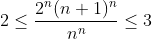
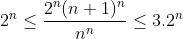
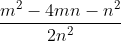
38. What are the limits of

What are the limits of

where n is a positive integer?
Cancel reply

Your email address will not be published. Required fields are marked *


Cancel reply

Your email address will not be published. Required fields are marked *


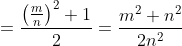
39. A tiled floor of a room has dimensions  m * m sq.m. Dimensions of the tile used are n * n sq.m. All tiles used are green tiles except diagonal tiles which are red. After some years some green tiles are replaced by red tiles to form an alternate red and green tile pattern. How many green tiles are removed?
(m  ≠ n and total number of tiles are odd).

  • Option : B
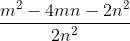
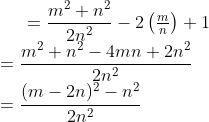
  • Explanation : Total red tiles initially

    Number and Algebra

    Total number of tiles

    Number and Algebra

    As number of red tiles > number of green tiles 

    (since room has odd number of tiles and corner tiles are red)

    Hence total red tiles required to form an alternate pattern
    Number and Algebra

    ∴ Number of green tiles removed

       Number and Algebra

Cancel reply

Your email address will not be published. Required fields are marked *


Cancel reply

Your email address will not be published. Required fields are marked *


40. Sum of an infinite geometric series is 3 and sum of an infinite geometric series formed from squares of the terms of the original series is 6. First term of the first series will be

Cancel reply

Your email address will not be published. Required fields are marked *


Cancel reply

Your email address will not be published. Required fields are marked *


Related Quiz.
Numbers and Algebra