
Manag., July-2018 – Q9


- Option : B
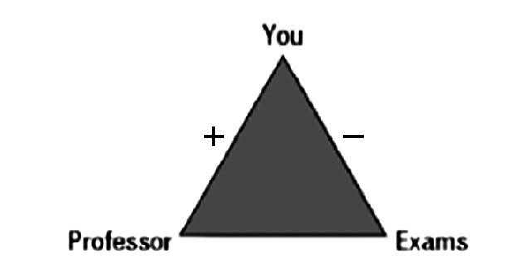
- Explanation : In 1946, social psychologist Fritz Heider proposed balance theory. Balance theory is sometimes called P-O-X theory because it focuses on situations containing three elements (triads): the person (P), the other person (O), and the attitude object (X). Heider proposed that a person’s understanding of the relationships among P, O, and X was either “balanced” or “unbalanced”. Balanced is the term for consistency. (For example, the principle that “my enemy’s enemy is my friend” is balanced, because there is something consistent about liking the person who has attacked your enemy.) A sign, positive (+) or negative (–), is assigned to each relationship. To determine whether balance exists, simply multiply the signs together. If the outcome is positive, the cognitive structure is balanced (consistent). If the outcome is negative, it is unbalanced. For example, in Figure, you like In 1946, social psychologist Fritz Heider proposed balance theory. Balance theory is sometimes called P-O-X theory because it focuses on situations containing three elements (triads): the person (P), the other person (O), and the attitude object (X). Heider proposed that a person’s understanding of the relationships among P, O and X was either “balanced” or “unbalanced”. Balanced is the term for consistency. (For example, the principle that “my enemy’s enemy is my friend” is balanced, because there is something consistent about liking the person who has attacked your enemy.) A sign, positive (+) or negative (–), is assigned to each relationship. To determine whether balance exists, simply multiply the signs together. If the outcome is positive, the cognitive structure is balanced (consistent). If the outcome is negative, it is unbalanced. For example, in Figure, you like your social psychology professor, but you and your professor both hate exams (you hate taking them and your professor hates writing and grading them). If you multiply the signs together, the outcome is positive, so the structure is balanced. Balance theory states that balanced states are preferred over unbalanced states, and that unbalanced states motivate people to change them to balanced states.

Accessibility
Oversized Widget
Saved in this browser. Nothing changes for anyone else.