
PREVIOUS YEAR SOLVED PAPERS - GATE 2018


- Option : A
- Explanation : So ‘a’ + 2 will be ‘c’, so Our next node p = {‘1’, ‘0’, ‘c’} and output will be 0, c. So answer is C
- Option : A
- Explanation : E1 entries > E2 entities
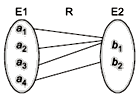 So Every entity in E1 is associated with exactly one entity in E2. So options A is correct options.


- Option : D
- Explanation : The Given functions is, an = 2n + 3
generating function for 1 is
 and n is
  , the generating function for an is
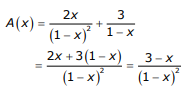 Which is option (D).
- Option : D
- Explanation : (P ⊕ P) ⊕ Q = (P ⊙P) ⊕ Q false (P ⊕ P) ⊕ Q = 1 ⊕ Q = Q (P ⊙ P) ⊕ Q = 0 ⊕ Q = Q (P ⊕ P) ⊕ Q ≠ (P ⊙ P) ⊕ Q
- Option : D
- Explanation : Only Eigen vector is
 multiples means that eigen value is repeated since if eigen values were distinct we will get one more independent eigen vector. So, II P has repeated eigen value is true. I need not be true since
  has repeated eigen values and yet it is invertible. III is true since if matrix has repeated eigen values then it cannot be diagonalizable.
