
UGM June 2019 Q97


- Option : C
- Explanation : The test statistic used for hypotheses of group difference with nominal level variables is the chi-square test. To examine a hypothesis of
association for two nominal level variables, first, the chi-square test statistic is calculated, and then one or another measure of
association is derived from it. In fact, a number of different measures of association exist for use with nominal level variables, all
based on the chi-square statistic. Two will be introduced here, one that is quite general and can be used in a range of situations, the
contingency coefficient (C), and one that is specialized for use with 2 × 2 tables, the phi coefficient.
Since nominal variables consist by nature of discrete categories, relating two nominal level variables to each other can only be done using a cross-tabulation, just as was done with hypotheses of group difference. The contingency coefficient (C) can be used with any size cross-tabulation table to provide a descriptive measure of association between the two variables. The C statistic is calculated from the chi-square value: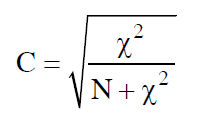
The chi-square value is divided by the sum of the chi-square value and the number of people on whom there are data; then the square root of this figure is taken to yield C.

Accessibility
Oversized Widget
Saved in this browser. Nothing changes for anyone else.